


2026/11/13
The short answer: Dashi is the broth at the heart of Japanese cooking, usually made from kombu (kelp) and katsuobushi (dried, smoked bonito). It is what makes miso soup, simmered dishes and noodle broths taste savory without being heavy. In Osaka, dashi leans on kombu, so it tastes softer and looks clearer and paler than the broth you may know from Tokyo or from Japanese restaurants abroad.
If you have ever wondered why a simple bowl of soup in Japan tastes so deep, this is the reason.
What is dashi made of?
Most restaurant dashi starts with two ingredients:
- Kombu: dried kelp, mostly from Hokkaido. It gives a gentle, rounded savoriness.
- Katsuobushi: bonito that has been simmered, smoked and dried until it is as hard as wood, then shaved into thin flakes. It adds aroma and a sharper savory note.
Other versions use dried sardines (niboshi) or dried shiitake mushrooms. Shiitake and kombu together make a dashi without any fish, which is useful for vegetarian dishes.
Why does dashi taste so savory?
Kombu is rich in glutamate, and katsuobushi is rich in inosinate. Both create the taste known as umami. When the two are combined, the savory taste becomes much stronger than either one alone. That is why most Japanese cooks use kombu and katsuobushi together rather than just one.
How is Osaka dashi different?
From the Edo period, kombu from Hokkaido was shipped to Osaka in large amounts on trading ships along the Sea of Japan coast. Osaka became a kombu city, and its cooking still reflects that.
| Osaka / Kansai | Tokyo / Kanto | |
|---|---|---|
| Main flavor | Kombu-forward | More katsuobushi |
| Soy sauce | Light-colored usukuchi | Dark koikuchi |
| Color of broth | Clear, pale gold | Darker brown |
| Taste | Soft and rounded | Stronger and saltier on the tongue |
The easiest place to notice this is a bowl of udon. In Osaka you can usually see the noodles through the broth.
Ichiban dashi and niban dashi
Japanese restaurants often make two kinds of dashi from the same ingredients:
- Ichiban dashi (first dashi): a short, gentle extraction with the best aroma. It is used for clear soups, where the broth is the main thing you taste.
- Niban dashi (second dashi): made by simmering the used kombu and katsuobushi again. It has less aroma but plenty of flavor, so it goes into simmered dishes and miso soup.
Where you will taste dashi in a Japanese meal
- Clear soup (suimono): the purest way to taste a kitchen’s dashi
- Simmered dishes: vegetables or fish cooked gently in seasoned dashi
- Chawanmushi: savory egg custard made with dashi
- Noodles and chazuke: udon, soba, or rice with broth poured over it at the end of the meal
Tasting dashi at Washoku Yu
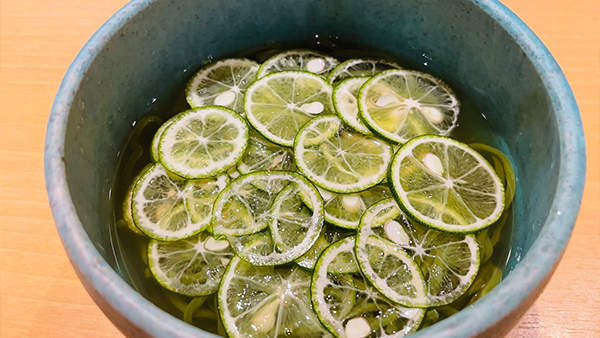
Chef Yonezawa learned Kansai cooking at a kappo restaurant in Kitashinchi, where kombu dashi is the base of almost everything. At Washoku Yu, the soup of the day and dishes like sea bream chazuke and soba with sudachi citrus are good ways to taste it. Courses start at 5,500 yen including tax.
If you avoid fish, tell us when you book. Many dashi-based dishes contain bonito, so it helps the kitchen to know in advance. For hours, access and booking, see our English page, and for more on Osaka-style dining, read What Is Kappo?
For more background, see Japan's traditional foods (Ministry of Agriculture, Forestry and Fisheries).
FAQ
What is dashi made from?
Most dashi is made from kombu (dried kelp) and katsuobushi (dried, smoked bonito flakes). Some versions use dried sardines or dried shiitake mushrooms.
Is dashi vegetarian?
Usually not, because most dashi contains bonito. Dashi made only from kombu and dried shiitake is vegetarian, so ask the restaurant in advance.
Why is Osaka dashi lighter in color?
Osaka cooking relies more on kombu and uses light-colored usukuchi soy sauce, so the broth stays clear and pale.