


2026/10/29
The short answer: you don’t need to know much about sake to order it well in Japan. Tell the staff whether you like it dry or a little sweeter, light or rich, and ask for something that goes with what you’re eating. If you want to pick for yourself, match the weight of the sake to the weight of the food: crisp, dry junmai with sashimi and tempura, fuller yamahai sake with simmered fish or sukiyaki.
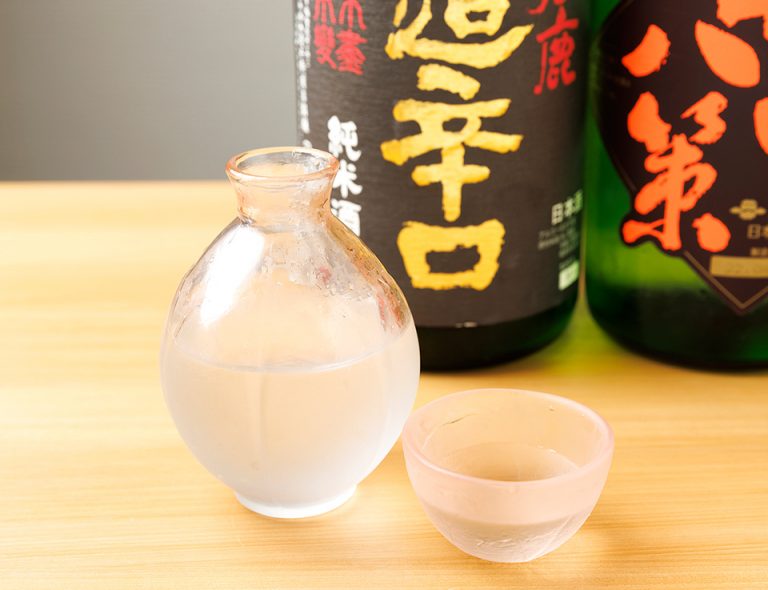
If it’s your first trip to Japan, you’re probably curious about sake and a little lost in front of a list written in Japanese. That’s completely normal. Even plenty of Japanese diners just order the one name they recognize. This guide covers the few words worth knowing, how to pair sake with Japanese food, and what to actually say when you order.
First, a quick word on the word “sake”
In Japanese, sake (酒) can mean alcohol in general. The rice drink you’re thinking of is usually called nihonshu (日本酒), literally “Japanese alcohol.” At a restaurant, saying “sake” will almost always be understood, but “nihonshu” is the word you’ll see on menus.
Most sake sits around 15 to 16 percent alcohol, a bit stronger than wine. It’s meant to be sipped alongside food, not knocked back.
Three label words that actually matter
Sake labels are packed with information, but for ordering with dinner, these three terms will get you most of the way.
- Junmai (純米): made only from rice, rice koji and water, with no added distilled alcohol. Usually rice-forward and easy to drink with food.
- Ginjo (吟醸) / Daiginjo (大吟醸): the rice is polished further and fermented slowly at low temperatures. Expect fruity, floral aromas. “Junmai ginjo” means both at once.
- Yamahai (山廃): a traditional method where the yeast starter develops slowly with natural lactic bacteria. These tend to be richer, with more acidity and savory depth, and many taste great warm.
Two more you may spot: muroka (無濾過, unfiltered, usually fuller in flavor) and namazake (生酒, unpasteurized, fresh and lively, always served chilled). Karakuchi (辛口) means dry, and cho-karakuchi (超辛口) means very dry.
How to pair sake with Japanese food
The basic idea is simple: light food, lighter sake; rich food, richer sake. Neither should overpower the other.
| Dish | Sake style that works | On our list at Washoku Yu |
|---|---|---|
| Sashimi (white fish, shellfish) | Crisp, dry junmai | Harushika Cho-Karakuchi Junmai (Nara), Senchu Hassaku Cho-Karakuchi Junmai (Kochi) |
| Clear soup (osuimono) | Gentle, soft junmai | Katafune Junmai (Niigata), Honkin Junmai (Nagano) |
| Tempura | Dry and sharp, to cut through the oil | Senchu Hassaku Cho-Karakuchi Junmai, Hakkaisan Junmai Ginjo (Niigata) |
| Grilled fish | Junmai with some body | Tenon Muroka Junmai (Shimane) |
| Simmered fish, seared wagyu sukiyaki | Rich yamahai or unfiltered sake | Tengumai Yamahai Junmai (Ishikawa), Tenon Muroka Junmai |
One thing that surprises people: the most aromatic, expensive daiginjo isn’t always the best match for a delicate dashi-based dish. Its perfume can drown out the broth. Fragrant ginjo is lovely as a first glass, or with lightly salted dishes.
Treat all of this as a starting point. Sea bream and yellowtail sashimi are very different in richness, and the right sake depends on what the chef is cooking that night.
Cold, room temperature or warm?
Temperature changes sake more than most people expect. The vocabulary is a little confusing, so here it is:
- Reishu (冷酒): chilled. Clean and refreshing. Best for namazake and ginjo.
- Hiya (冷や): despite the name, this means room temperature, not cold. It’s where you taste the sake most honestly.
- Kan (燗) / Atsukan (熱燗): warmed. Warming brings out sweetness and umami. Try nurukan (ぬる燗, about 40°C) if you’re new to warm sake.
In autumn, look out for hiyaoroshi (ひやおろし): sake brewed in winter, rested over the summer and released in the fall. It’s rounder and mellower, and it goes beautifully with autumn ingredients like matsutake and late-season hamo.
What to say when you order
You can point at the menu and smile, and that works fine. But a couple of simple phrases go a long way, especially at a counter where the chef is right in front of you.
- “Osusume no nihonshu wa arimasu ka?” Do you have a sake you’d recommend?
- “Karakuchi ga suki desu.” I like dry sake.
- “Ryori ni au no o onegai shimasu.” Something that goes with the food, please.
- “Kanpai!” Cheers!
If you’re drinking with friends, a nice old custom is to pour for each other rather than for yourself. Nobody will mind if you don’t, but it’s a small gesture that Japanese hosts appreciate.
The sake we pour at Washoku Yu
Chef Yonezawa, who owns the restaurant, tastes every sake before it goes on the list, and only keeps the ones he thinks work with his cooking. As of October 2026, the list looks like this (price per glass, tax included):
| Sake | Region | Price |
|---|---|---|
| Tenon Muroka Junmai (天穏 無濾過 純米酒) | Shimane | 800 yen |
| Katafune Junmai (かたふね 純米酒) | Niigata | 800 yen |
| Honkin Junmai (本金 純米酒) | Nagano | 800 yen |
| Tengumai Yamahai Junmai (天狗舞 山廃仕込み 純米酒) | Ishikawa | 800 yen |
| Harushika Cho-Karakuchi Junmai (春鹿 超辛口 純米酒) | Nara | 800 yen |
| Senchu Hassaku Cho-Karakuchi Junmai (船中八策 超辛口 純米酒) | Kochi | 900 yen |
| Honkin (本金) | Nagano | 950 yen |
| Senchu Hassaku Namazake (船中八策 生酒) | Kochi | 950 yen |
| Hakkaisan Junmai Ginjo (八海山 純米吟醸) | Niigata | 1,000 yen |
You’ll notice it’s almost all junmai. The goal isn’t flashy aroma. It’s sake that sits comfortably next to the food and makes it taste better. The list changes with what we can get, so check our drinks page (in Japanese) or just ask on the night.
Not a sake drinker? We also have beer, shochu, umeshu (plum wine), wine by the glass or bottle, highballs and non-alcoholic beer.
For more background, see Japan's traditional foods (Ministry of Agriculture, Forestry and Fisheries) and the Japan National Tourism Organization.
FAQ
Is sake stronger than wine?
Slightly. Most sake is around 15 to 16 percent alcohol, compared with about 12 to 14 percent for most wine.
Should sake be served hot or cold?
It depends on the sake. Fresh, aromatic styles like namazake and ginjo are best chilled. Many junmai and yamahai sakes are good at room temperature or warmed. If you’re unsure, ask the staff.
What does “hiya” mean on a sake menu?
“Hiya” means room temperature. Chilled sake is called “reishu.”
What sake goes best with sushi and sashimi?
A crisp, dry junmai is the easiest match. It refreshes the palate without covering up the flavor of the fish.
How much is sake at Washoku Yu?
A glass costs 800 to 1,000 yen including tax. Course menus start at 5,500 yen, with drinks charged separately.
Can the chef choose a sake for me?
Yes. Tell us what you usually like, and we’ll suggest something that matches that night’s dishes.
About Washoku Yu
Washoku Yu is a small kappo-style Japanese restaurant about a 9-minute walk from Shin-Osaka Station, or 5 minutes from Higashi-Mikuni Station on the Osaka Metro Midosuji Line. Chef Yonezawa trained at the kappo restaurant Ishiwakawa in Kitashinchi and later cooked at a Japanese official residence in Australia. If you’re new to Japanese food, our visitor set menu of sashimi, tempura and seared wagyu sukiyaki (5,500 yen) is a good place to start. New to counter dining? Read What Is Kappo? first.
Open 17:00 to 22:00, closed Sundays. To book, call +81-90-7965-9963 or email info@wasyoku-yuu.com. More details are on our English page.